



 |
|||||
|
|||||
|
|||||
|
|||||
| |||||
Friday, March 4, 2016


Saturday, November 15, 2014
Holidays!!
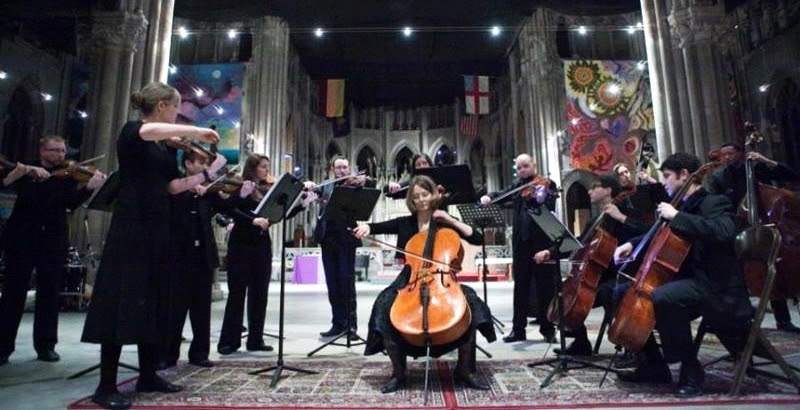
You are cordially invited to A. Cavallo Violin's afternoon of chamber music on Sunday, November 23rd at 2 pm.
We will be featuring Philadelphia's new and acclaimed conductor-less string ensemble, Prometheus, in an intimate concert featuring beloved works in the chamber music repertoire.
Admission is free, with a $10 Suggested Donation, for the chamber concert and following reception. Space is limited so please RSVP no later than November 20th at 610-646-7400 or by responding to this email.
Thursday, October 23, 2014
As a violinmaker I am always looking for ways to improve the sound and level of my instruments, one of them being
competitions. I just returned from a violin competition in Tucson
Arizona, sponsored by theViolin Makers Association of Arizona
International. VMAAI is a non-profit, educational organization founded
in 1958, the oldest of its kind in the USA. It was a very rewarding trip
for several reasons.
The
first was the presence of the workmanship judge Christopher Germain,
former President of the Violin Society of America and a well respected
authority in the violin world. It is always great opportunity to have
your instrument critiqued in a way that you can learn and grow from,
helping you become a better maker.
The
second was that it is an opportunity to meet with your fellow
violinmakers and share ideas and information. There were makers there
from all over the US and even a few international entries.
The
third reason is that we had an opportunity to listen to our instruments
being played by professionals and then having the chance to get their
feedback on what a musician looks and listens for. This all comes
together in the making of better instruments. There are very good
instruments being made by living makers today and that should be taken
into consideration by the today's players.
On
a related note, I was reminded about the importance of properly
humidifying your instruments. The impact it can have when traveling or
with winter quickly approaching is dramatic and potentially damaging.
When my violin arrived in Tucson, it did not sound like itself and
needed time to acclimate to the extreme dry air there. Keeping a
humidifier in your arsenal will help protect your instruments from this
trauma in the winter months.
-Alex Reza
Saturday, October 4, 2014
Our Treasure Chest
Dear Players, Makers, and Dealers:
We
had a great VSA and Fall retail kickoff. Now we have some choice
traded instruments, fittings and tonewood available that will knock your
socks off in price!
Look below as this inventory reduction sale will only last until October 20th, 2014!
We Look forward to seeing you!
Alex, Laura, Rachel, Michele, Dirk, Chris and Xander
|
Cello, Cellos, Cellos
We
have over 75 Cellos to offer you. In the fractionals, we offer 10% per
year discount up to 50% on all Academia and Conservatory Models.
In
fine makers' instruments we feature Melanson, Dimitrov, Sumners,
Hornsteiner, Kreutzinger, Wultur, Loveri and other older French and
German cellos.
In Concert and Master Art cellos we have a vast overstock and will
|


Wood You Need Anything?
We
beefed up our inventory for the VSA and still have a few really choice
pieces available including 1-piece backs for violins and violas, a few
heirloom quality cello backs, and hundreds of spruce tops as well as
fingerboards and Nebraska Willow blocks and linings.
If you buy a whole set all fittings are 50% off for the first 5 sets.
Some of the wood is old enough and ready to go! |


Fiddlers Delight
Or Help us keep violins off the streets!
Now you're askin! We have over 250 Violins to choose from! All fractional trade ins are significantly reduced till October 15.
All Purchasers of Master art violins will get a FREE Elite violin case or a $200 discount on the instrument! (By October 15)
We
have new arrivals from Peter Bingen, Raymond Melanson, Dirk Henry,
Denis Cormier, Arie Werbrouck, Ming-Jiang Zhu, and Douglas Cox. Come
see them!
We also have a few "A. Fischof, Wien" and Mark Henry violins....Make us an offer!
|

Do We Fit?
All
fittings are reduced for quantity orders. If you order 5 of the same
items you will receive a 10% discount. For every five thereafter, we
will increase it by 10% up to 40% off!
|
 |
|
Viola by Martin Olteanu
|
Violas Viola!
All student violas are 10% per year up to 50% off!
We
have new violas by Ming-Jiang Zhu, Christopher Jacoby, Dirk Henry, Mark
Moreland, Otto Erdesz, Doug Cox, Martin Olteanu, and Samuel Payton.
All new Master Art, Concert and Conservatory violas at the regular price receive a FREE Elite viola case or a $250 discount!
Thursday, September 25, 2014
OLD.....NEW....Aniversary

New VS. Old
The Eternal Question
Many Strads are 300 - We're 15!
Longevity? Violins are
an amazing item in that category. There are still playable examples of
violins being used over four hundred years after they were created.
This subject reminded me of a recent experience.
When I was at VSA (the
Violin Society of America) meeting last week, I was asked by Joe Curtin
to "blind test" a selection of older makers' and living makers'
instruments in a acoustically dead room in the convention hotel. They
put dark glasses on me so I had no visual references, then I played
instruments and put them in to categories and rankings as I saw fit. The
objective of the project was to study how players respond and make
choices in testing instruments.
While I think this
process is useful, it is only partial. Players try instruments in
various environments that respond to the violin. As an example, a dead
hotel room will sound totally different to the player than an alive hall
or very spacious dead room. The type of surfaces in each environment
can significantly alter the impressions of the player. So, you might
say, "just test all in a dead room so all you hear is the violin, not
the room."
Therein lies the
problem. In my 35 years of experience, many instruments sound superior
in an isolated environment, but are surprisingly dramatically inferior
in actual performing circumstances.
This is the reason we
take strings instruments on trial. Try them under all circumstances and
in all possible environments to see how you can live with them.
Also, throw away your
prejudices! It is clear that new violins do not sound or respond
significantly worse than old violins. Chinese violins do not sound
"Chinese" and German violins don't sound "German," etc. Antiqued
violins don't sound better that "straight" violins, but the perception
of them is often enhanced by the old "feel" of them. Becoming unbiased
is an important part of the process.
Then, lastly, find a
violin you love and can be passionate about. An instrument should
inspire and challenge you, not just be a good purchase. When you find
the one, you will know!
Violins have been
around for 500 years, but can you believe in October we will have been
in business for 15 years? We began as a closet in Alex and Laura Ross'
home in 1999. Our original reason for being was to provide the best
violins possible for the Omaha Conservatory of Music students, but we
quickly grew beyond those borders. It couldn't have been possible
without you - our loyal customers - so in honor of our 15 year
anniversary, we're offering you 15 percent off on everything (excluding consignment items and repairs). Come in through October 1st to take advantage of this special.
We look forward to seeing you! -Alex
Friday, August 8, 2014
Eternal Arches

Musings from the Bench
Stability and Striking Sound
by Christopher Jacoby
Your
instrument is a changing creature, as everyone knows. The thing that
makes the violin the soaring, projecting superhero of sound it is, is
the same thing that wears it down: Pressure.
The
violin is a masterwork of arches, shaped to allow enormous amounts of
pressure to be put onto a delicate little corpus. A violin with full
setup weighs around a pound and a half, yet withstands about 36 pounds
of pressure when the strings are tuned up to pitch. How? Arches.
The
Roman aqueducts stand to this day, as modern roads and works crumble
and are replaced by the decay around them. The masonry arches built into
their structure are perfection in engineering, and your instrument
benefits from the same simple technology. A violin maker's choice of
stable wood, carved into strong, flexible arches, will ensure an
instrument that can better withstand the pressure of strings and the
changing seasons.
Take
a look at your instrument. Have the strings suddenly become much too
high above the fingerboard, making it difficult to press them down above
first position? Is your bridge leaning at an awkward angle? Put bow to
string. Does the sound respond instantaneously to your playing?
It's
inevitable that pressure causes ill effects in a violin, especially in
these days of wild and wooly weather, shifting quickly between blazing
hot and humid and then rainy cool spells. Sound posts fall over, seams
open, necks fall, bridges warp, and saddles lift up, all from pressure.
Our
workshop staff here at A. Cavallo Violins are trained and ready to
assess and address any detrimental changes that your stringed buddy has
suffered. Like changing the oil in your car, regular upkeep and
attention will save you from needing larger, more intrusive repairs
further down the line.
"The
pressure that a violin or cello is under is going to change how it
sounds," Dirk Henry, our shop foreman says, resting at his bench. "If
you find the sound you love has gone away, it's time to come in for a
setup adjustment. A checkup, if you will!"
Stability may be fleeting, but good sound need not be. Bring your instrument by the shop; we can't wait to see you.
|
Save
25%
|
All Intermediate Instruments are on Sale!
Violins $1,500 - 4,500,
now $1,125 - 3,375
Violas $1,800 - 5,000,
now $1350 - 3,750
Cellos $3500 - 8,000,
now $2625 - 6000
|
|
This offer is available from August 8 to August 16, 2014
only non-consignment instruments are eligible
Payment must be cash, credit card or check
| |
Monday, May 27, 2013
The Chinrest Problem
Violin
and Viola chinrests are a common subject of discussion. Since the
chinrest was invented in the early 19th century there have been an
infinite number of variations on the shape and design. There is an
additional consideration, the shoulder pad, as the chinrest and shoulder
pad work together to help the player position and support the
instrument in the most secure and stress free manner.
Another
problem the customer does not always understand is that many chinrests
have more than one name. For instance the "Berber" and "Ohrenform" are
the same. Many "Dresden" chinrests are actually close in design to the
"Berlin," and the Guarneri chinrest has at least 5 different designs
including "large cup," small cup," " European," "Rounded end" and
"Classic."
Brackets
vary from standard to Hill and other custom designs. They all affect
the acoustics of the instrument and the comfort of the player. Many
brackets of inferior products are not straight, so the chinrest is not
properly oriented to the instruments and will apply damaging pressure to
the violin and not be comfortable to the player.
Basically,
Chinrests fit players dependent on their physique and style of play.
Jaw shape, prominence of the collarbone, length of the neck, depth of
the sub-clavicular space, the shape of the shoulders, and the overall
size and reach of the player are factors that influence comfort and fit.
This is a very complex topic that should be addressed to the
individual. Unfortunately many teachers find what is comfortable for
them and then recommend it to their students, when in reality it may
only work for 10% of players.
At
A. Cavallo Violins, we try to carry a version of all the major
chinrests and will fit them to you at purchase at no charge. Because we
are a direct buyer, our prices are the lowest in the industry for the
quality of chinrests we carry. All of our chinrests have minimized
footprints, high enough arches to avoid buzzes with the tailpiece, and
comfortable designs with just the right rounded front edges and properly
swooped cups.

Chinrest Promotion
Call or come in to our shop in Omaha or Bryn Mawr and get $5.00 off any chinrest! Fitting is complimentary!
Click on the picture and shop our chinrests on line.Only one per customer, Offer ends 6/1/2103
Wednesday, May 22, 2013
This
is it! The best sale of the year! All instruments are dramatically
marked down for the Memorial Day Weekend. Prices on many instruments
are as low as 50% under our normal price! This special is only Friday, Saturday and Monday (call for an appointment) of Memorial Weekend.
If you are out of town, these specials are also good. Just call Alan in Bryn Mawr at 610.646.7400 or Alex in Omaha at 402.827.9270
If you are out of town, these specials are also good. Just call Alan in Bryn Mawr at 610.646.7400 or Alex in Omaha at 402.827.9270

Student Instrument Mark Downs
Selected student instruments are marked down dramatically!!!
"Academia" violins were $565 NOW AS LOW AS $400.00!!!
"Concert" Violas were $950 are now as low as $700.00 (27% savings)
ALL "Master Art" violins and violas are 50% under list price!!!
Francesco Ligetti Violins were $3200 now $1600, Cellos were $12,000 NOW $6,000!!!
Mark Henry Violins were $4500, Now $3500!!
Mark Henry Violins were $4500, Now $3500!!
Dramatically Reduced Master Instruments
We'll Never do this Again!
Beyond the scope of normal, we have selected master instruments reduced to prices that will never be replicated.
Violins by Sipe, Buccelle, Melanson, Quaranta, Dimitrov, Faruolo and others as much as 50% reduced!
Violas by Olteanu, Damon Gray, Lacek, and others as much as 45% reduced!
Violas by Olteanu, Damon Gray, Lacek, and others as much as 45% reduced!
Cello by Jan Szlachtowski regularly $13,800 NOW $7000
Cello by Maciej Lacek was $14,000 NOW $7,000
Basses (2) by Calin Wultur so low I cannot publish the price! Thursday, March 28, 2013


Subscribe to:
Posts (Atom)